Preparing for the UPSC interview can feel very different from preparing for the Prelims or Mains. After months, sometimes years, of studying facts, analysing policies, and writing answers, you suddenly find yourself preparing for a conversation. That shift often makes candidates nervous. They wonder what the panel expects, how difficult the questions will be, and whether a single wrong answer could cost them their dream.
The truth is, the UPSC personality test isn’t designed to catch you off guard. It’s meant to understand the person behind the answer sheet. The interview board wants to know how you think, how you handle uncertainty, and whether you possess the qualities expected of a future civil servant.
If you’re searching for practical UPSC interview tips, understanding what the panel actually evaluates is the first step toward confident preparation.
The UPSC Interview Is Not a Knowledge Test
One of the biggest misconceptions among aspirants is that the interview is another examination of their academic knowledge. In reality, your knowledge has already been assessed extensively through the Prelims and Mains.
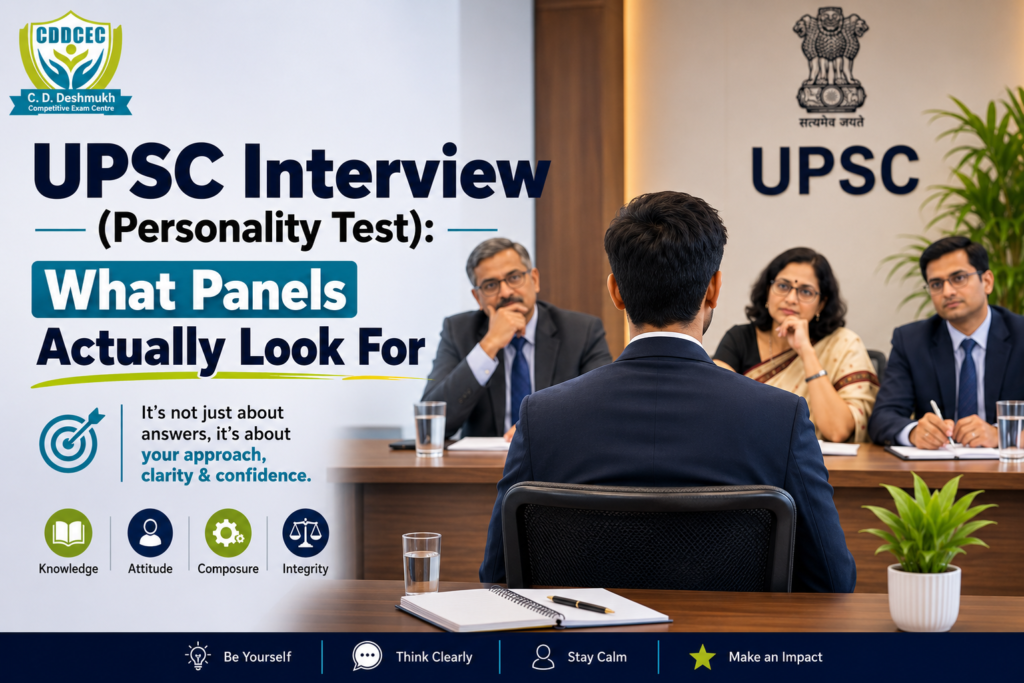
The interview, officially called the Personality Test, focuses on something much broader.
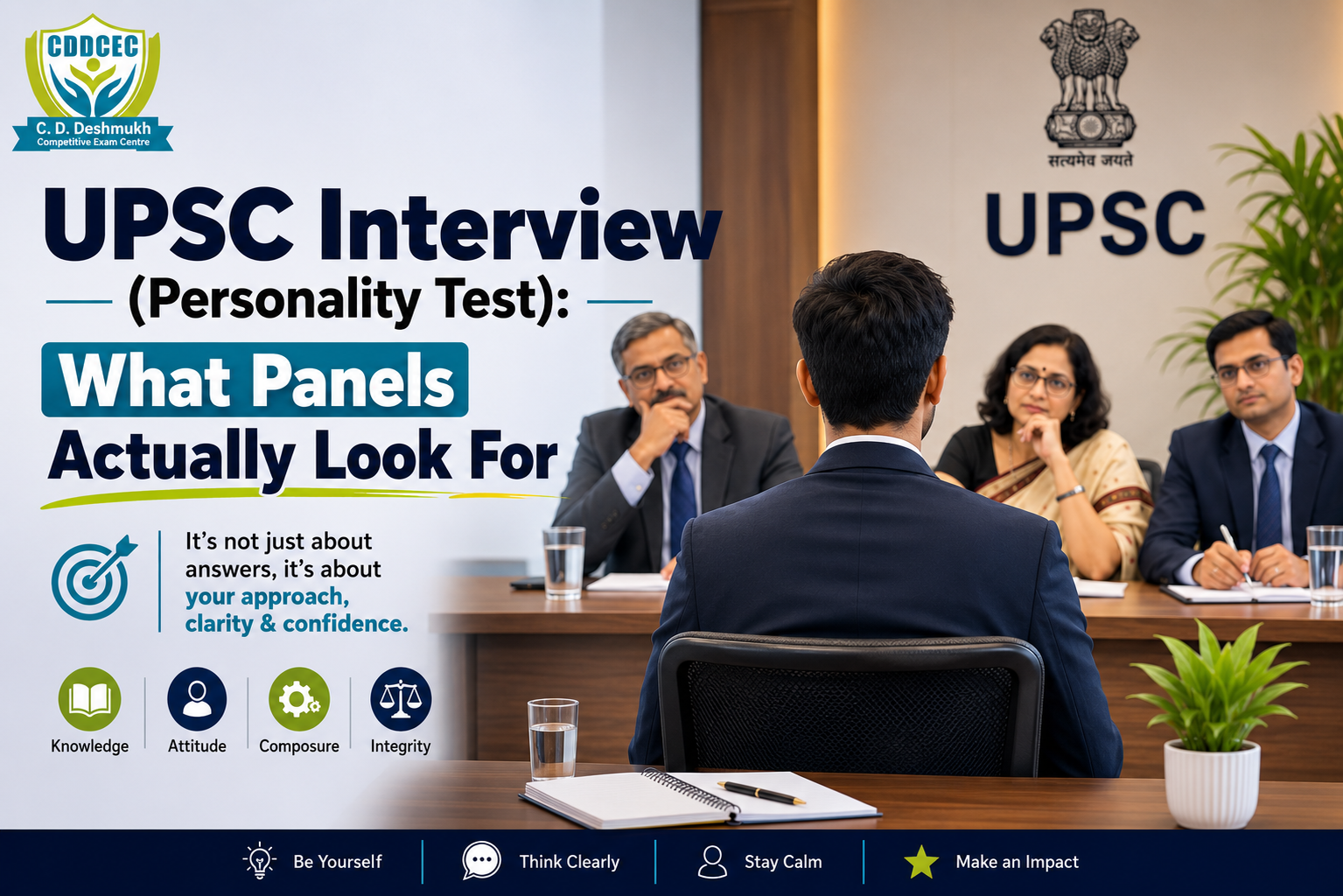
The panel evaluates your ability to:
- Think logically under pressure
- Express ideas clearly
- Maintain composure
- Demonstrate integrity and maturity
- Show balanced judgment
- Display awareness of society and governance
In many cases, the board is less interested in whether you know every answer and more interested in how you respond when you don’t.
Why Personality Matters More Than Perfect Answers
Civil servants deal with unpredictable situations every day. They interact with people from different backgrounds, make difficult decisions, resolve conflicts, and implement policies that affect thousands of lives.
A candidate who remains calm, listens carefully, and thinks before speaking often leaves a stronger impression than someone who tries to impress with memorised facts.
What most aspirants don’t realise is that confidence is not about speaking loudly or giving lengthy answers. It comes from clarity of thought and honesty.
If you don’t know the answer to a question, admitting it respectfully is often viewed more positively than attempting to bluff.
What the Interview Panel Observes
Clarity of Thought
The interview board appreciates candidates who organise their thoughts before answering.
Instead of rushing into an answer, take a few seconds to understand the question. A structured response reflects discipline and sound judgment.
For example, when discussing a public policy issue, explain:
- The problem
- Different perspectives
- Possible solutions
- Your balanced opinion
This demonstrates analytical ability rather than superficial knowledge.
Communication Skills
Excellent communication isn’t about using complex vocabulary.
The panel values candidates who can explain ideas simply and confidently. Civil servants regularly communicate with citizens, government officials, and political leaders. The ability to make complicated issues understandable is an important skill.
During the UPSC personality test, focus on:
- Speaking naturally
- Maintaining eye contact
- Avoiding unnecessary jargon
- Keeping answers concise
- Listening carefully before responding
Emotional Stability Under Pressure
Interview boards often ask unexpected or challenging questions.
Sometimes they deliberately disagree with your opinion or ask follow-up questions that test your composure.
They’re not trying to intimidate you.
They’re observing how you react when challenged.
Can you remain respectful?
Can you defend your viewpoint with logic?
Can you acknowledge another perspective without becoming defensive?
These qualities matter far more than delivering a flawless answer.
Honesty and Integrity
Integrity is one of the core values expected from future administrators.
If the panel asks something outside your area of knowledge, there’s nothing wrong with saying:
“I’m sorry, I’m not aware of the complete answer to this question.”
An honest response demonstrates maturity and self-awareness.
Attempting to fabricate information usually becomes obvious during follow-up questions.
Awareness Beyond Textbooks
Many candidates prepare extensively for static subjects but overlook current affairs and real-world developments.
Interview questions often connect:
- National issues
- International affairs
- Economic developments
- Social challenges
- Technology
- Environmental concerns
- Ethical dilemmas
The panel expects informed opinions rather than memorised editorials.
Reading newspapers consistently and understanding the reasoning behind major events helps develop balanced perspectives.
Your Detailed Application Form (DAF) Is Extremely Important
One of the most valuable UPSC interview tips is this: know your Detailed Application Form inside out.
Almost every interview begins with questions based on your DAF.
The panel may ask about:
- Your hometown
- Educational background
- Work experience
- Optional subject
- Hobbies
- Achievements
- Previous employment
- State-specific issues
Every detail you mention becomes a potential discussion point.
In our experience, candidates who prepare thoroughly for their DAF feel significantly more confident because they can anticipate much of the conversation.
The Importance of Balanced Opinions
UPSC doesn’t expect candidates to have extreme views on every issue.
Instead, they appreciate balanced thinking.
Suppose you’re asked about a controversial policy.
Rather than taking an emotional stance, discuss:
- Benefits
- Challenges
- Different stakeholder perspectives
- Practical improvements
This reflects administrative maturity.
Future civil servants often work in situations where multiple viewpoints must be considered before making decisions.
Confidence Without Overconfidence
There’s a subtle but important difference between confidence and arrogance.
Confident candidates:
- Accept when they don’t know something
- Listen patiently
- Respect differing opinions
- Speak with clarity
Overconfident candidates often interrupt, argue unnecessarily, or try to prove every point.
The interview panel notices this distinction quickly.
Body Language Matters More Than You Think
Your non-verbal communication creates the first impression before you answer the first question.
Pay attention to:
- Sitting upright
- Maintaining comfortable eye contact
- Smiling naturally
- Avoiding unnecessary hand movements
- Keeping a calm facial expression
Body language should complement your answers, not distract from them.
Common Mistakes Candidates Make
Many aspirants unknowingly undermine their interview performance due to avoidable habits.
Some of the most common mistakes include:
Memorising Model Answers
Prepared answers sound artificial.
The interview is a conversation, not a speech competition.
Trying to Impress the Panel
Candidates sometimes use complicated language or quote excessive facts.
Simple, thoughtful answers usually create a stronger impact.
Becoming Defensive
Panels may challenge your opinion intentionally.
Respond respectfully instead of treating it as an argument.
Ignoring Current Affairs
Even candidates with excellent academic preparation can struggle if they aren’t up to date on recent developments.
Neglecting Mock Interviews
Mock interviews help identify issues with communication, body language, and confidence before the actual interview.
Constructive feedback makes a noticeable difference.
How to Prepare Effectively for the UPSC Personality Test
Preparation should go beyond reading newspapers.
Focus on developing your personality as much as your knowledge.
Build a preparation routine that includes:
- Revising your DAF thoroughly
- Discussing current affairs regularly
- Participating in mock interviews
- Improving communication skills
- Reading about governance and public administration
- Practising structured responses to opinion-based questions
Over time, this preparation becomes visible in your confidence and clarity.
The Role of Expert Guidance
Preparing alone often makes it difficult to identify personal weaknesses.
Experienced mentors can provide valuable feedback on communication style, answer structure, confidence, and body language. Regular mock interviews conducted by faculty familiar with the UPSC interview process help candidates experience realistic interview environments and improve through constructive evaluation.
At CD Deshmukh Institute, personality development is treated as an essential part of UPSC preparation. Through expert mentorship, detailed mock interviews, and personalised feedback, aspirants learn not just how to answer questions but how to present themselves as thoughtful, balanced, and capable future administrators.
Final Thoughts
The UPSC personality test is not about finding the smartest candidate in the room. It’s about identifying individuals who possess the judgment, integrity, empathy, and maturity required to serve the nation responsibly.
As you prepare, remember that knowledge opens the interview, but personality shapes the final impression. Follow practical UPSC interview tips, stay informed, practise honest communication, and present your authentic self with confidence.
With consistent preparation, thoughtful guidance, and the right mindset, the interview becomes less about facing a panel and more about demonstrating the qualities you’ve developed throughout your UPSC journey.